Search



WORLDWIDE SHIPPING
fast, flexible, secure options

ONLINE SUPPORT 24 / 7
anytime, anywhere help

MONEY BACK GUARANTEE
shop with confidence

WIDE SELECTION
every day low prices
Consumer Electronics
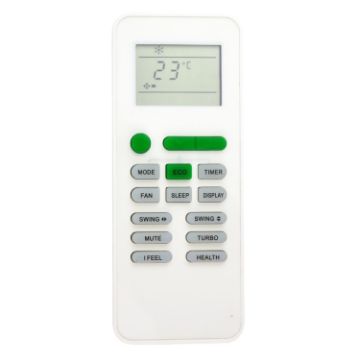
For TCL Air Conditioner 3VDC Remote Control Replacement Parts
- The remote control has buttons, which is easy to use and can be easily controlled with one hand.
- Suitable for TCL 3VDC air conditioner remote control
- No programming or settings are required.
- Note: It is not original, it is a replacement! Most of the functions are the same as the original remote control, but there may be some different buttons!
- Material: ABS plastic
- Power supply: 2 AAA batteries (not included)
$7.95
$9.30
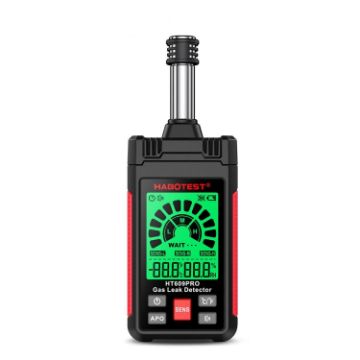
HABOTEST Combustible Gas Methane Leak Detector
- Combustible gas detection range: 50~1000ppm
- Temperature: -20.0 ~ 60.0 degrees Celsius (-4.0 ~ 140.0 degrees Fahrenheit)
- Humidity detection: 0.0% ~ 99.9% rh
- Power supply: 3x1.5v AAA alkaline batteries (batteries are not included in the product)
- Different sensitivities can be selected according to the measurement environment, high sensitivity/medium sensitivity/low sensitivity
- Telescopic rod design, which can be extended to increase the measurement distance of the sensor
- Audio-visual alarm, the screen will change color according to the measured concentration value and emit a buzzing alarm sound
- Select the temperature unit to switch as needed
$38.02
$46.76
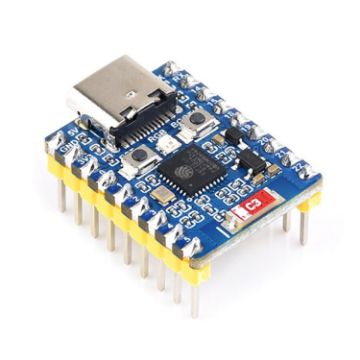
Waveshare ESP32-C6 Mini WiFi 6 & Bluetooth 5 Dual Processors Development Board, Spec: Zero-M
- Equipped with high-performance RISC-V 32-bit processor and low-power RISC-V 32-bit processor, the high-performance processor has a main frequency of up to 160MHz, and the low-power processor clock can reach 20MHz
- Integrates 320 XB ROM, 512 KB HP SRAM, 16
- Supports 2.4 GHz WiFi and low-power Bluetooth (Bluetooth LE) dual-mode wireless communication, with excellent RF performance
- Adopts stamp hole design, onboard ceramic antenna, convenient for integration into the baseboard designed by the user
- Supports flexible clock, module power supply separate setting and other controls to achieve multi-scenario low-power mode
- Onboard USB Type-C interface, leading to 22 GPIOs for flexible configuration of peripheral functions
$12.56
$15.07
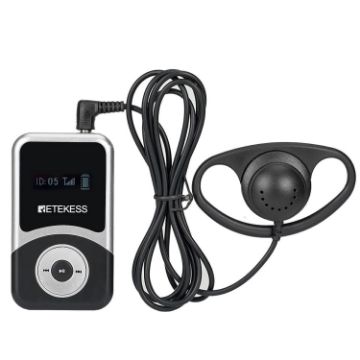
RETEKESS T131S Guide Receiver Wireless Explanation Receiver
- Note: this is only a wireless receiver, it must be matched with a transmitter (195-216MHz) to build a wireless tour guide system
- Frequency range: 195-216MHz
- Channels: 49 channels
- Frequency response: 50Hz-18000Hz
- Operating voltage: DC 3.7V
- Audio input: 3.5mm cable
- Frequency response range: 50-18000Hz
- Signal-to-noise ratio (SNR): 80dB (typical)
$34.05
$42.22
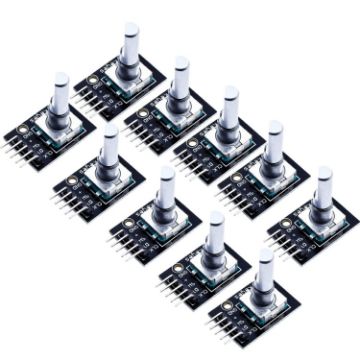
10 PCS KY-040 360 Degree Rotary Encoder Module
- Material: Electronic components + PCB
- Working voltage: 5V
- Number of pulses per revolution: 20
- The rotary encoder can count the number of output pulses during rotation in the forward and reverse directions by rotation. Unlike the potentiometer, the rotation count is unlimited. With the buttons on the rotary encoder, it can be reset to the initial state, that is, counting from 0.
- Working principle: The incremental encoder is a rotary sensor that converts the rotational displacement into a series of digital pulse signals. These pulses are used to control angular displacement. The conversion of angular displacement in the Eltra encoder uses the photoelectric scanning principle. The reading system is based on the rotation of the radial index disc (code disc) composed of alternating light-transmitting windows and opaque windows, and is simultaneously illuminated vertically by an infrared light source, and the light projects the image of the code disc onto the surface of the receiver . The receiver is covered with a layer of diffraction grating, which has the same window width as the code wheel. The receiver's job is to feel the changes produced by the rotation of the disc, and then convert the light changes into corresponding electrical changes. Then the low-level signal is raised to a higher level, and a square pulse without any interference is generated, which must be handled by an electronic circuit. The reading system usually uses a differential method, that is, comparing two different signals with the same waveform but a phase difference of 180 in order to improve the quality and stability of the output signal. The reading is formed based on the difference between the two signals, thereby eliminating interference.
$10.06
$12.07
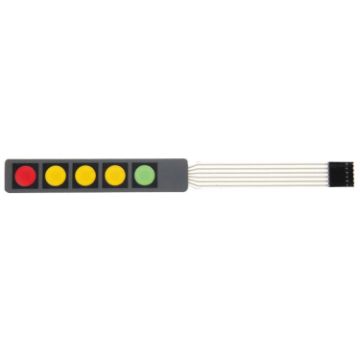
10 PCS Matrix 1 x 5 Keys Membrane Switch Keypad
- Made of quality material, durable to use.
- 6 pins pitch connector, 1x5 type 5 keys.
- White sticker can peel off for adhesive mounting.
- The back can be firmly fixed to the chassis surface.
- Used widely in industrial and home electronic equipments, instrument, etc.
$12.63
$14.52
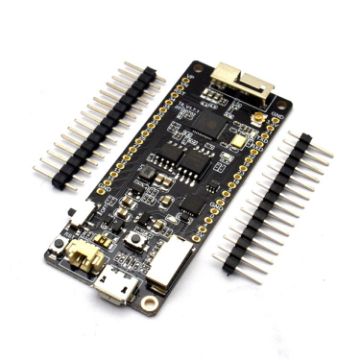
TTGO T8 V1.7 WiFi Bluetooth Module ESP32 WROVER 4MB FLASH 8MB PSRAM Module
- Espressif official ESP32-WROVER module
- New ESP32 version: REV1
- Wireless Internet
- Bluetooth
- 4MB flash memory
- 8MB PSRAM
- Lithium battery interface, 500mA maximum charging current
- Support TF memory card
$16.97
$20.87
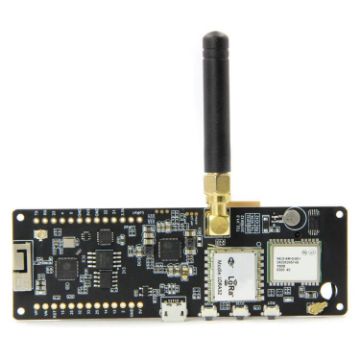
TTGO T-Beamv1.0 ESP32 Chipset Bluetooth WiFi Module 433MHz LoRa NEO-6M GPS Module with SMA Antenna, Original Version
- Working voltage: 1.8~13.7V
- Acceptable current: 10~114mA
- Emission current:
- 120mA at + 20dBm
- 90 mA lies at +17dBm
- 29mA at +13dBm
- Working frequency: 923MHz
- Transmitting power: + 20dBm
$45.41
$54.49
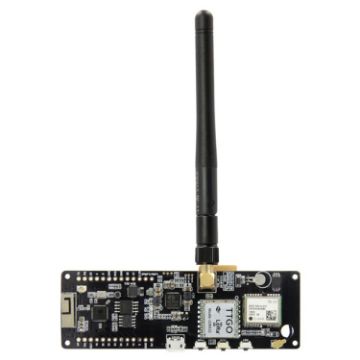
TTGO T-Beamv1.0 ESP32 Chipset Bluetooth WiFi Module 915MHz LoRa NEO-6M GPS Module with SMA Antenna, Original Version
- Working voltage: 1.8~13.7V
- Acceptable current: 10~114mA
- Emission current:
- 120mA at + 20dBm
- 90 mA lies at +17dBm
- 29mA at +13dBm
- Working frequency: 923MHz
- Transmitting power: + 20dBm
$43.27
$54.09
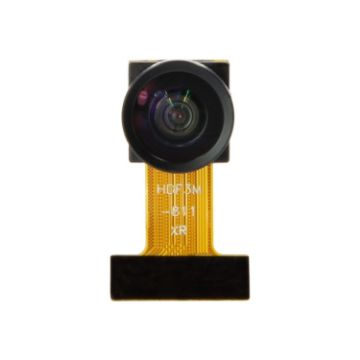
TTGO OV2640 Fisheye Single Lens Camera Module for T-Camera Plus ESP32-DOWDQ6 8MB SPRAM
- Product series: camera module
- Model: OV2640
- Purpose: video recorder
- Power: 3.3W
- Adapt to T-Camera Plus ESP32-DOWDQ6 8MB SPRAM
$13.16
$15.40
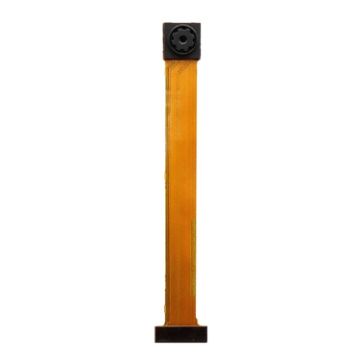
TTGO OV2640 Standard Extended Single Lens Camera Module for T-Camera Plus ESP32-DOWDQ6 8MB SPRAM
- Product series: camera module
- Model: OV2640
- Purpose: video recorder
- Power: 3.3W
- Adapt to T-Camera Plus ESP32-DOWDQ6 8MB SPRAM
$12.88
$15.20
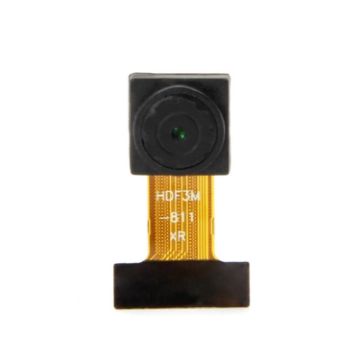
TTGO OV2640 Standard Single Lens Camera Module for T-Camera Plus ESP32-DOWDQ6 8MB SPRAM
- Product series: camera module
- Model: OV2640
- Purpose: video recorder
- Power: 3.3W
- Adapt to T-Camera Plus ESP32-DOWDQ6 8MB SPRAM
$8.67
$10.06

NEED HELP?
Payment options
